Showing posts with label astronomy. Show all posts
Showing posts with label astronomy. Show all posts
Tuesday, March 22, 2011
NGC 6384: Spiral Beyond The Stars
Sunday, March 20, 2011

Saturday, March 5, 2011
Red Snow Moon Over Edmonton

Explanation: What's hovering between those buildings? The Moon. The above image was taken two weeks ago as the full Snow Moon started to rise above Edmonton, Alberta, Canada. The odd coincidence between the angular size of the far distant Moon and the angular width of nearby buildings created a striking juxtaposition. Backing away from the buildings so to reduce their angular size was a key to planning the image. The temperature was so low, -25 C, that plumes of steam rose from neighboring oil refineries. The above image was taken during a momentary break in the plumes. The rising Moon appears red here for the same reason that a setting Sun appears red -- because blue light is preferentially scattered away by intervening air. In this case, the shimmering steam plumes likely also caused the Moon to appear slightly compressed. The next full moon, the full Worm Moon, will occur in mid-March.
Friday, March 4, 2011

Tuesday, March 1, 2011
Discovery Visits The Space Station

Explanation: What's happening outside the space station? A space shuttle has docked. Five days ago, the space shuttle Discovery was launched to the International Space Station, carrying six crew members and the large Leonardo Multi Purpose Logistics Module. Three days ago, as pictured above, the docked shuttle was prepared to be unloaded by the space stations Dextre robot and Canadarm2. The above expansive photo captures much more, however, including Japan's Kibo Experiment Module on the lower right, Earth across the top of the frame, and a seemingly starless backdrop of space in the distance. During the next week, the shuttle and ISS crews are scheduled to permanently attach Leonardo as well as fix and upgrade parts of the ISS. After 38 previous voyages, this is expected to be the last space mission for the Space Shuttle Discovery.
Saturday, February 26, 2011
Mammatus Clouds Over Olympic Valley

Explanation: What's happened to these clouds? Normal cloud bottoms are flat because moist warm air that rises and cools will condense into water droplets at a very specific temperature, which usually corresponds to a very specific height. After water droplets form that air becomes an opaque cloud. Under some conditions, however, cloud pockets can develop that contain large droplets of water or ice that fall into clear air as they evaporate. Such pockets may occur in turbulent air near a thunderstorm, being seen near the top of an anvil cloud, for example. Resulting mammatus clouds can appear especially dramatic if sunlit from the side. Thesemammatus clouds were photographed last August over Olympic Valley, California, USA.
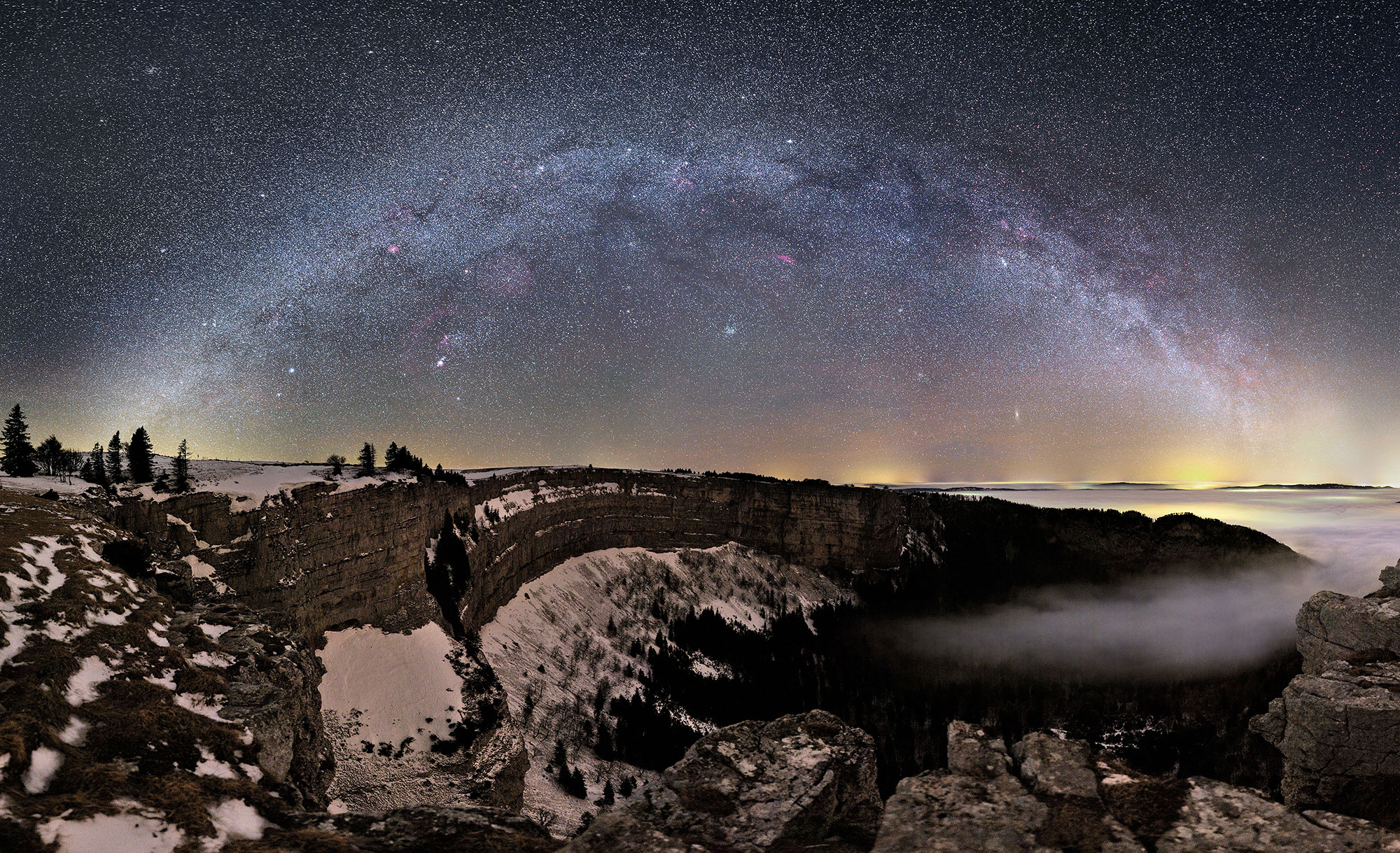
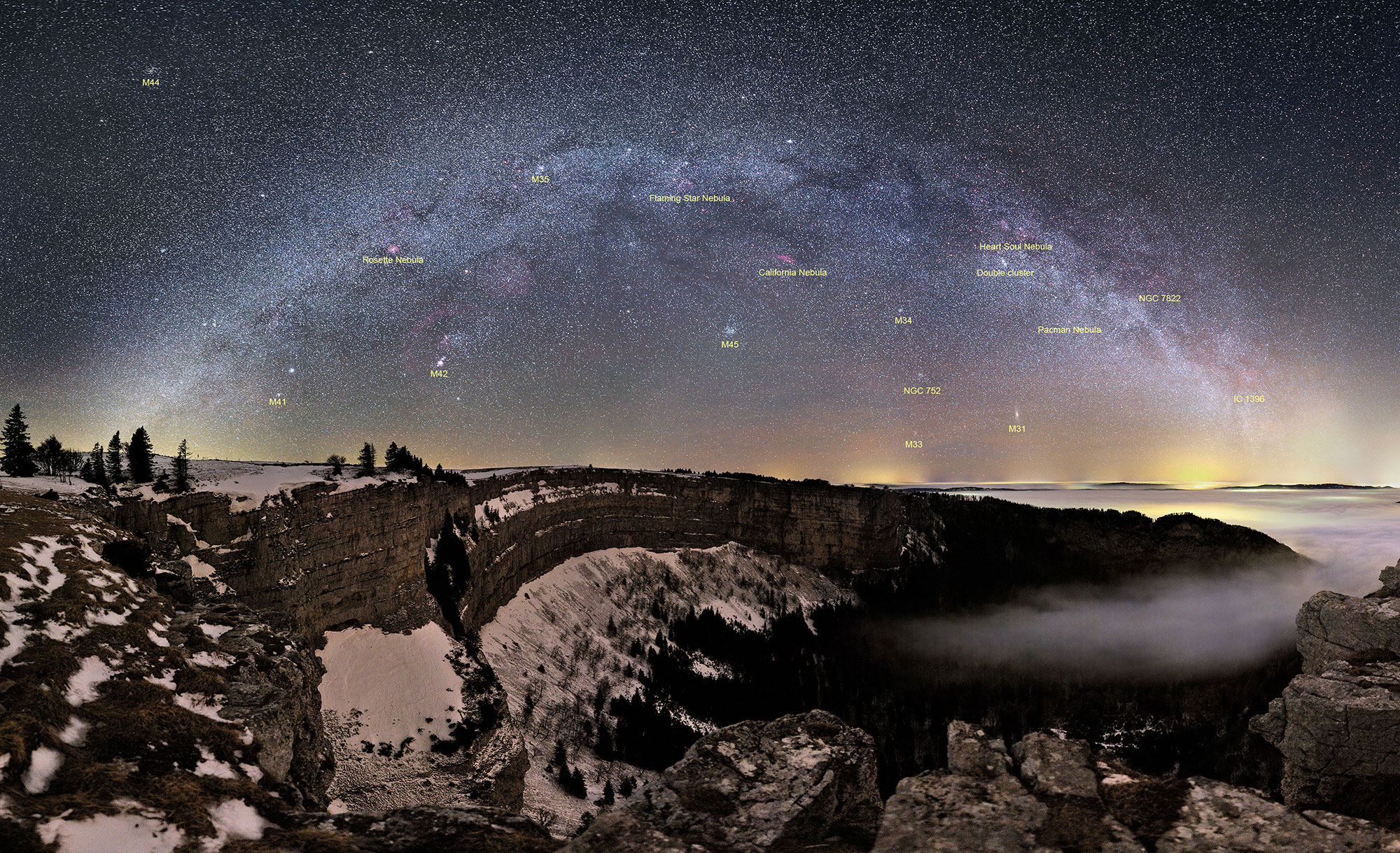
Milky Way Over Switzerland

Friday, February 25, 2011

Subscribe to:
Posts (Atom)